
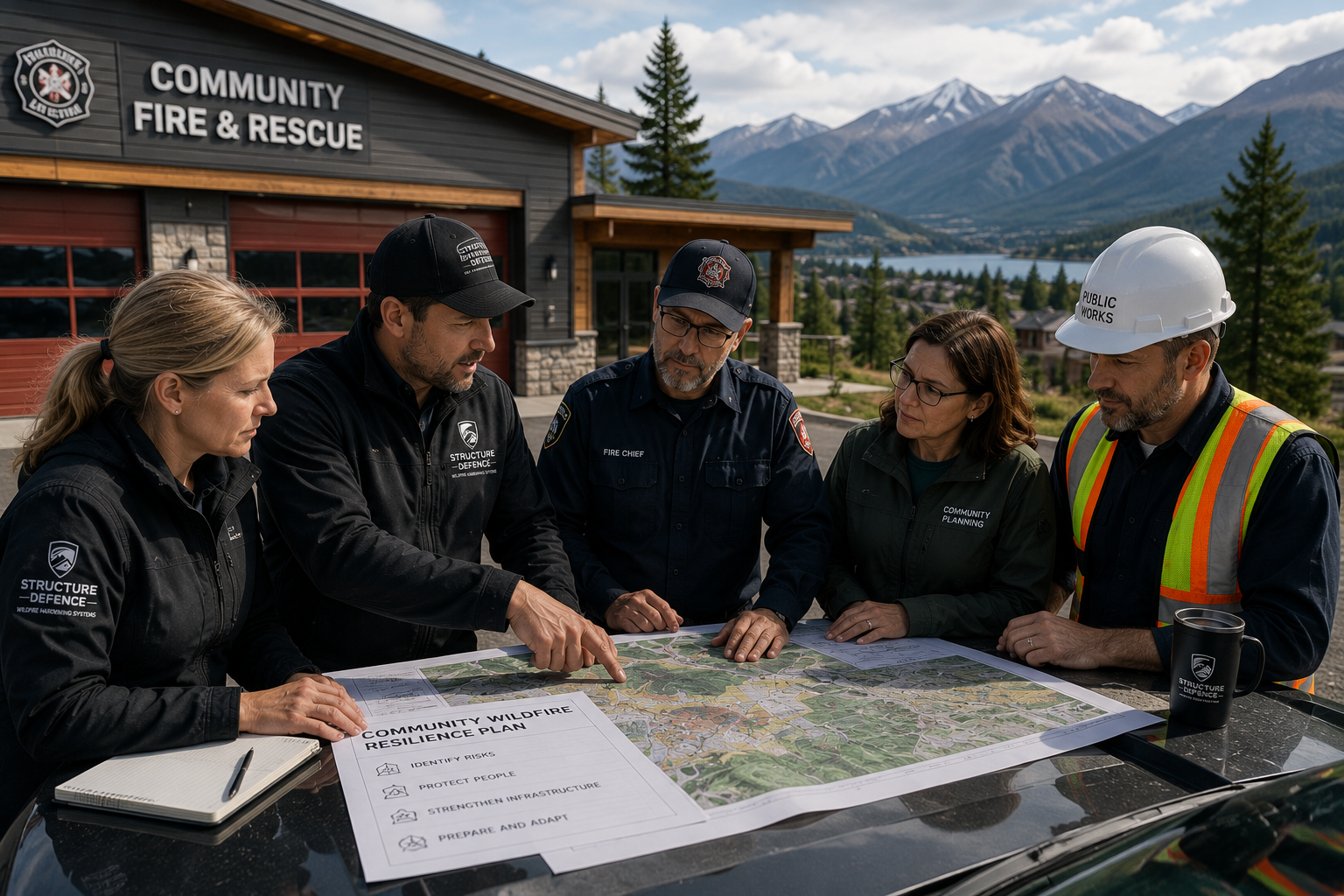
Communities & Government
Stronger Communities Start With Shared Resilience.
Wildfire resilience isn’t built by individual properties alone.
We help communities, governments, and organizations understand risks, prioritize action, and strengthen preparedness for the future.
Where are you?
Choose the option that best describes your current focus. We’ll help you identify the next best step.

Exploring Community Risk
We’re beginning to understand our exposure and vulnerabilities.
Planning For Future Resilience
We want to identify priorities and create a road-map.
Protecting Critical Infrastructure
We need to better understand vulnerabilities around key assets.
Looking For A Resilience Partner
We’re seeking experienced guidance and long-term support.
Common Questions We Hear.
Leaders ask these questions as they work to protect their communities and make informed decisions.
-
The best place to start is by understanding your communities unique risks, priorities, and objectives. A clear assessment can help identify vulnerabilities, focus resources effectively, and create a practical path toward greater resilience.
-
Identifying vulnerabilities starts with understanding how wildfire could impact your community. This includes evaluating factors such as vegetation, infrastructure, access routes, critical facilities, and community preparedness. A structured review helps highlight areas where improvements can have the greatest impact.
-
Every community is different, but priorities often focus on protecting people, critical infrastructure, evacuation routes, and essential services. Understanding your specific risks helps ensure resources are directed toward the actions that will provide the greatest benefit.
-
Community engagement starts with clear communication, practical education, and helping people understand how wildfire risk relates to their daily lives. When residents understand the risks ad the actions they can take, meaningful participation and log-term resilience become easier to achieve.
-
Building long-term resilience requires a proactive approach that combines planning, education, risk reduction, and ongoing improvement. By making informed decisions today and continuously adapting over time, communities can become better prepared for future wildfire challenges.
What We’ve Learned From The Front Lines.
Communities that plan early have more options.
Early planning creates flexibility when it matters most.
Shared responsibility creates stronger outcomes.
Targeted actions can reduce risk and increase resilience
Prepared communities recover faster.
Resilient communities are better able to withstand , adapt, and rebuild.
Who we work with.
We partner with communities and organizations across Canada.

Municipalities
Regional Districts

First Nations
Stratas & HOAs

Critical Infrastructure
Resorts & Recreation